
How to Make an Award-Winning Film on a Low Budget: 10 Tips
An award-winning low-budget film starts with a big concept contained in a small cast and few locations, leaves room for the audience's imagination, and spends its money on sound, the right actors and a distinctive location. Careful planning, hunting the sales for props and a strong visual atmosphere hide the rest of the budget's limits.
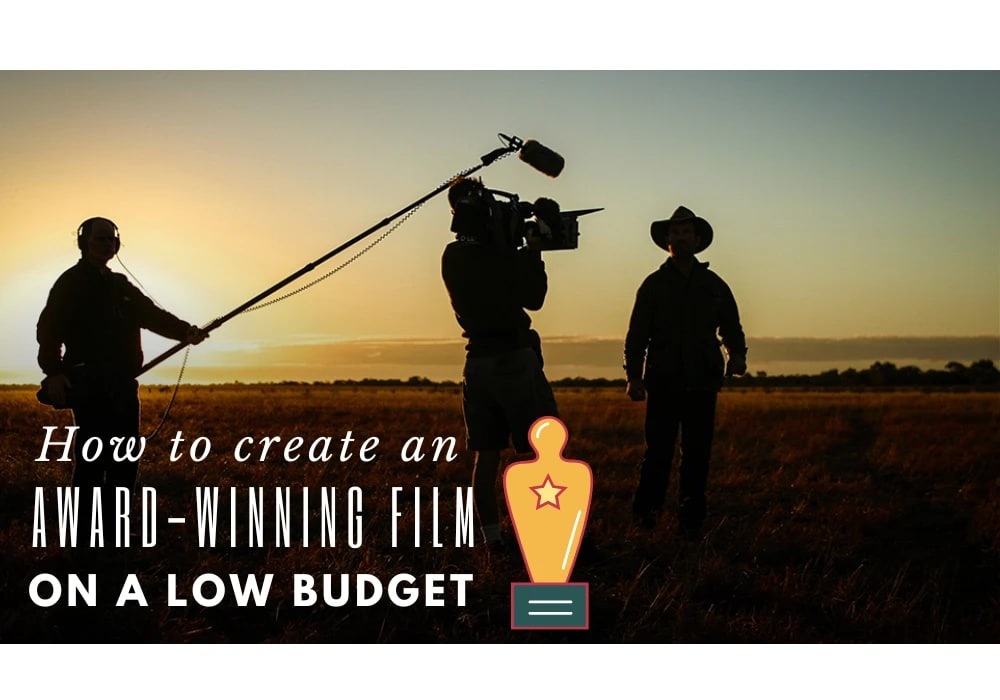
From pre-production right through to post-production, here are ten tips to help you make a high-quality, award-worthy film, no matter how limited your budget.
1. Think big: an enticing concept

It is no secret that the screenplay is everything, yet indie filmmakers still often overlook it. Behind the colourful visuals or jaw-dropping effects of every successful film is one essential thing: a captivating story. It is easy to forget that most people watching a film care only about the story and how engaging the characters are, not about impressive techniques. When you are making a film on a tight budget, let your writing flourish.
Look at the most successful indie films and you will see that they present a huge, exciting concept but find creative ways to contain it in a small cast and a few locations. Buried (2010) follows a US truck driver working in Iraq who wakes to find he has been buried alive, with limited time to get out. Open Water (2003) is about a couple left stranded in shark-infested water after their diving boat leaves without them. The whole of Locke (2013) is confined to a single car journey, yet it never stops being engaging. If the concept sounds new, audiences will watch and respond to it, even if it is a little rough around the edges. Sometimes that adds to the charm. Do not be afraid to share your script, or even the idea, with as many people as possible before shooting. If they get excited by it, there is a good chance you are on the right track, and a good elevator pitch makes sharing it easy.
2. Leave room for imagination
Indie filmmakers often fall into the trap of thinking they need to explain everything for the complexity of their story to shine through. Deliberately leaving information out and building mystery will strengthen your film. It shows you to be a more sophisticated filmmaker, and it lets the audience imagine a much larger world outside the on-screen action. How many times have you watched a genre film and felt the tension drain away the moment you saw the monster?
Jaws (1975) has one of the most famous stories of this kind. Spielberg planned to show far more of the shark, but technical problems forced him to find creative ways to suggest its presence without the audience seeing it, and that is a large part of why it became one of the most successful horror films of all time. The technique applies whatever the genre, and it is just as useful when writing dialogue or building character. Our guide to the art of suspense goes deeper.
3. Write what you have
It may be the most common piece of advice, but it is true. It is easy to get lost in a vast, fantastical world of imagination only to discover that certain parts are impossible to pull off without a bottomless bank account. By writing a film around what you already have access to, you save a huge share of the budget and craft something that feels unique to you.
Locations are the obvious example. Whether your grandmother has an old isolated farmhouse or your cousin's friend can get you into a school, these are assets that can drastically raise your production value. Beyond locations, writing what you have works in endless ways. A relative may have a store of beautiful vintage props and clothing you could centre a story on, or your parents may be talented artists who can create one-of-a-kind pieces to feature throughout.
4. Location is key

Even if you cannot afford a great camera, locations and production design will always carry much of the responsibility for how your visuals look. Searching for something unique, even if it costs slightly more than you planned, is one of the best ways to make a film look professional. Somewhere dense and quirky will help your film stand out, and writing a story in which your characters have no choice but to stay in that location makes the most of it. Think of The Head Hunter (2018) and The Grand Budapest Hotel (2014).
5. Build a world off screen

The most engaging filmmakers understand world-building, and it can be done even when you are confined to one room. If your script calls for a huge set piece such as a crash or a dramatic death, show the tension before and after and leave the event itself to the imagination. Both 10 Cloverfield Lane (2016) and The Night Eats the World (2018) tell big post-apocalyptic stories, but they build tension by confining the audience and the characters to a single location, where sound and subtle clues suggest what is happening outside.
When a limited budget rules out special effects, do not be afraid to cut away and let sound tell the story. It is often more powerful. Both A Clockwork Orange (1971) and Reservoir Dogs (1992) have disturbing scenes made far stronger because the camera cuts away from the action and sound paints the picture in the viewer's mind. Their imagination will always be more horrifying than anything you could show them.
6. The importance of sound
Many indie filmmakers overlook how much sound matters to a professional-feeling film. One of the first things film schools teach is that sound is the factor that tells an audience whether a film was made by amateurs or professionals. Audiences will forgive imperfect visuals, but it is near impossible to keep someone watching if the sound is bad. When budgeting, set aside a significant portion for the sound department. On set, get an experienced sound recordist and hire good microphones. In post-production, spend time on carefully chosen and recorded Foley. If you can, even for a day, have a professional mixer look at your film and adjust the levels on good monitors.
7. Plan for the sales
Whether you are a producer, writer, director or production designer, one useful habit is to plan ahead for sales, online and in shops. You may not be able to afford the props, costumes or effects you need at full price, but there are sales throughout the year that let you buy them without breaking the bank. Whatever your budget, there are also ways to source these things for free: in Ireland, Free Trade Ireland, the reuse site run by the local authorities, is worth scanning, as are the free sections on Adverts.ie and Facebook Marketplace, because you never know what you will find.
8. Cast the right actors
When you do not have the budget for impressive visuals or effects, story and performances are the two things that keep an audience invested. Casting your friends may save time and money, but it is worth spending some of your limited budget on actors who can deliver. That does not mean they have to be stars, or even very experienced. Taking the time to find the right actor is essential to raising your production value.
9. Visual style and atmosphere

Style should not be what decides the quality of your story, but a distinctive, purposeful style can disguise a small budget. Many indie filmmakers also overlook atmosphere. Even if your film is limited to one location or is built purely on conversation, there are always ways to craft a memorable, engaging atmosphere. Despite the stretched budget of Sinister (2012), the filmmakers used darkness to suggest the film was bigger than it was. Strong single light sources illuminate the subject while deepening the surrounding darkness, so the audience cannot tell how small the house really is. The Exorcist (1973) and E.T. (1982) use light in the same way. Haze machines are another affordable way to build atmosphere and lift the quality of the cinematography.
10. Plan, plan, plan
For the best chance of a professional-looking film on a tight budget, give yourself as much time as possible to plan. The more time you have to plan, the better the film will be. Careful scheduling and shot listing, for example, let you fit far more shots into as few days as possible. Surround yourself with a passionate team who all want the film to be the best it can be. Share your ideas with outsiders, because it is the best way to learn whether your film works. Ask for help, and respect and act on every note you receive before you shoot. Our micro-budget filmmaking tips cover the producing side in more detail.
Whatever budget you are working with, filmmaking is about being creative and using what you have to achieve something spectacular. Do not let a small budget put you off making a magical or ambitious film. And finally, the most important key to success: make sure you have fun.
Casting on a budget? Whether you are an independent producer, a first-time director or a student filmmaker, posting a casting on Actorly is free. Your breakdown goes straight out to the actors on Actorly, to registered Irish agencies, or to both, depending on who you want to hear from. Actorly is built on current casting technology: you can search every actor on the platform, invite the ones you want, and request self-tapes that arrive directly on your Actorly dashboard, ready to play, shortlist and share with your team. Join Actorly as a caster and get to work.
Frequently asked questions
Can you make an award-winning film on a low budget?
Yes. Films such as Buried, Open Water and Locke show that a captivating story with a big concept, contained in a small cast and few locations, matters far more to audiences than expensive visuals.
What should a low-budget film spend its money on?
Sound first: an experienced recordist, good microphones and a proper mix. After that, the right actors and a distinctive location, which carry the production value when you cannot afford a great camera.
How do I make a low-budget film look professional?
Choose a unique location, build atmosphere with strong single light sources, darkness and haze, cut away from expensive action and let sound tell the story, and plan every shot in advance.
Should I cast my friends in my low-budget film?
It saves money, but performances are one of the two things that keep an audience invested. It is worth spending part of your budget on actors who can deliver, even if they are not stars or very experienced.
How much should I plan before shooting a low-budget film?
As much as you possibly can. Careful scheduling and shot listing let you fit more shots into fewer days, and sharing your ideas with outsiders before the shoot is the best way to find out whether the film works.
Casting directors post their castings on Actorly.
Build a profile in minutes, get casting alerts matched to your playing age, and apply for free.
More from the blog
 For filmmakers
The Elevator Pitch: How to Sell Your Film Story in 30 Seconds
How to write an elevator pitch for your film: film comparisons, a clear logline, a short synopsis, your protagonist and antagonist, and why the theme matters.
 For filmmakers
How to Make a Christmas Movie: Five Tips for Filmmakers
How to make a Christmas movie people return to every year: the festive setting, real heart, a dose of jeopardy, characters uniting and a family-friendly tone.
 For filmmakers
Micro-Budget Filmmaking: 5 Tips for Producers
Micro-budget filmmaking tips for producers: draft the budget first, pick an achievable script, build a passionate team, borrow locations and schedule humanely.